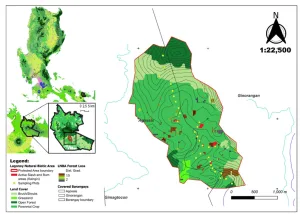
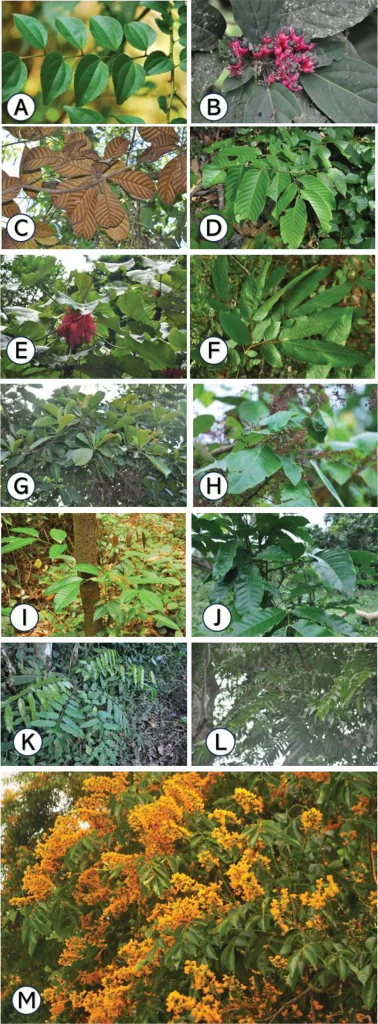
A vegetation survey of the Mts. Palay-palay-Mataas-na-Gulod Protected Landscape documented 294 plant morpho-species, including 42 Philippine endemic species and 31 threatened species. The protected landscape is the last remaining natural lowland forest in Cavite and serves as an ecological refuge near Metro Manila.
The study assessed plant communities along four transects using the national Biodiversity Assessment and Monitoring Systems framework. Researchers found differences in forest structure and species composition across the sites. Areas near Pico de Loro recorded the highest species richness and diversity, while interior forest stations showed more advanced stages of forest recovery and were strongly associated with guijo (Shorea guiso), a critically endangered tree species. The survey also identified 43 species that may represent new provincial records based on available published literature.
First-authored by IESM faculty member Enrico L. Replan, the study provides baseline information on the vegetation and conservation value of the protected landscape. Its findings can support biodiversity monitoring and management planning for one of southern Luzon’s remaining lowland forest ecosystems.
Reference: Replan, E. L., Umali, A. G. A., Tobias, A. B., Pulan, D. E., & Malabrigo, P. L. (2026). High plant diversity in a poorly documented lowland forest: Evidence from the Mts. Palay-palay-Mataas-na-Gulod Protected Landscape, Philippines. Biodiversity, 1–19. https://doi.org/10.1080/14888386.2026.2692520