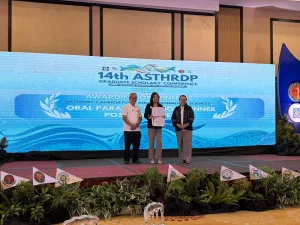
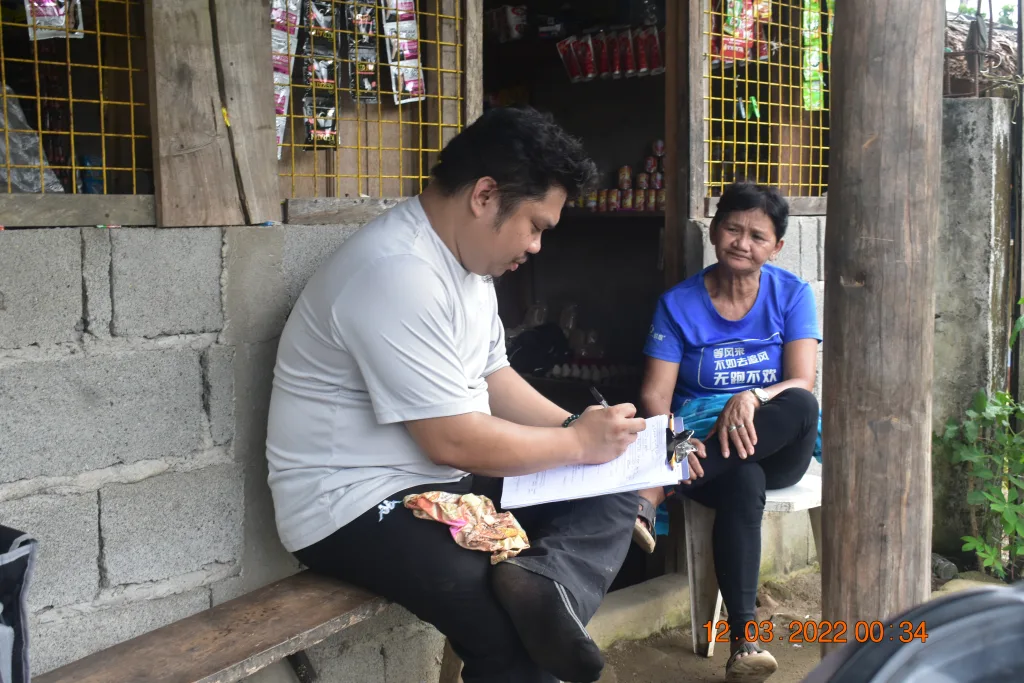
Community participation in conservation is shaped not only by environmental awareness but also by household livelihood conditions, according to a study on the Lagonoy Natural Biotic Area (LNBA) in Camarines Sur. The study, authored by Dr. Enrico Replan, assistant professor at the Institute of Environmental Science and Meteorology (IESM), UP Diliman, and Dr. Leonardo M. Florece of UP Los Baños, was published in the Journal of Environmental Science and Management.
The research examined the socioeconomic and demographic factors affecting residents’ willingness to conserve biodiversity and ecosystem services in the LNBA. Based on household surveys, the study found that conservation participation is influenced by factors such as income, household size, market access, forest dependence, and attitudes toward environmental protection. While community support for conservation was generally high, the findings suggest that financial stability and livelihood security affect residents’ capacity to participate in conservation efforts.
The study highlights the need for conservation approaches that address both ecological protection and the socioeconomic needs of upland communities. It suggests that community-led programs, alternative livelihood initiatives, and collaborative management may be more effective than strict punitive measures in sustaining conservation participation in the region.
Replan, E. L., & Florece, L. M. (2026). Socio-economic determinants of community willingness to conserve the Lagonoy Natural Biotic Area, Camarines Sur, Philippines. Journal of Environmental Science and Management, 29(1), 59–76. https://journals.uplb.edu.ph/index.php/JESAM/article/view/1722/1136
![Read more about the article Unlocking Data-Driven Water Resources Management in the Philippines through Hydrological Modeling Solutions [IESM@22 Anniversary Talk Series]](https://iesm.science.upd.edu.ph/wp-content/uploads/2025/03/IESM-22nd-Anniv-Talk-Series_Cabigao-300x251.png)