IESM alumna Anjela A. Ilagan has published a new study reconstructing historical storm surge events across the Philippines using decades of tide gauge observations from National Mapping and Resource Information Authority (NAMRIA). Published in Natural Hazards, the research examined records from 60 tide gauge stations covering 1947 to 2024, addressing a gap in nationwide studies based on long-term instrumental observations. Ilagan conducted the research under the mentorship of her adviser Olivia C. Cabrera and Marcelino Q. Villafuerte II of PAGASA, who are also co-authors of the paper.
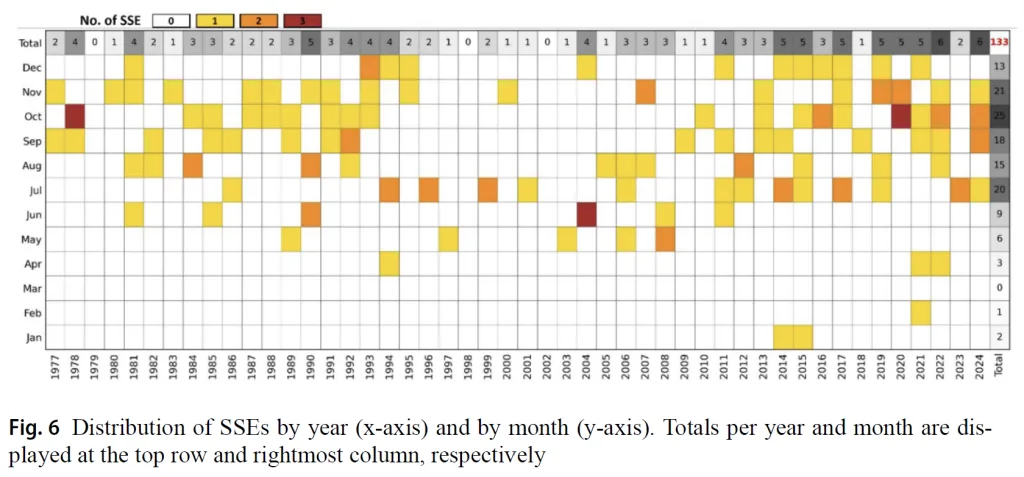
The researchers identified 133 storm surge events across 43 coastal stations, providing a clearer picture of where, when, and under what conditions storm surges have occurred around the country. Most recorded surges ranged from 20 to 50 centimeters, but the study found that the timing of astronomical tides can substantially increase total coastal water levels. Storm tides reached or exceeded one meter in about 39 percent of the identified events. The results also highlight the influence of local coastal features, wind direction, and bathymetry, showing why communities exposed to similar tropical cyclones may experience very different surge conditions.
The resulting dataset is described by the authors as the most comprehensive instrument-based storm surge inventory for the Philippines to date. It provides an observational reference that can support storm surge forecasting, model validation, localized hazard assessment, and coastal risk planning. The publication builds on Ilagan’s earlier graduate research on storm surges. Her MS Meteorology thesis, “Meteorological Drivers of Storm Surge Events in the Ilocos Region,” received Best in Oral Presentation in the MS Category at the 12th ASTHRDP Graduate Scholars’ Conference in 2024, with the new study extending the work to coastal locations across the Philippines.
Reference: Ilagan, A. A., Cabrera, O. C., & Villafuerte, M. Q., II. (2026). Investigating historical storm surge occurrences in the Philippines from tide gauge observations. Natural Hazards, 122(18). https://doi.org/10.1007/s11069-026-08360-x