A new paper co-authored by IESM faculty member Dr. Benjamin M. Vallejo Jr. examines the growing threat posed by biological invasions in the Philippines and identifies the major obstacles that hinder effective management. The study brings together current knowledge on non-native species in the country and highlights the need for more coordinated, science-based approaches to address their impacts.
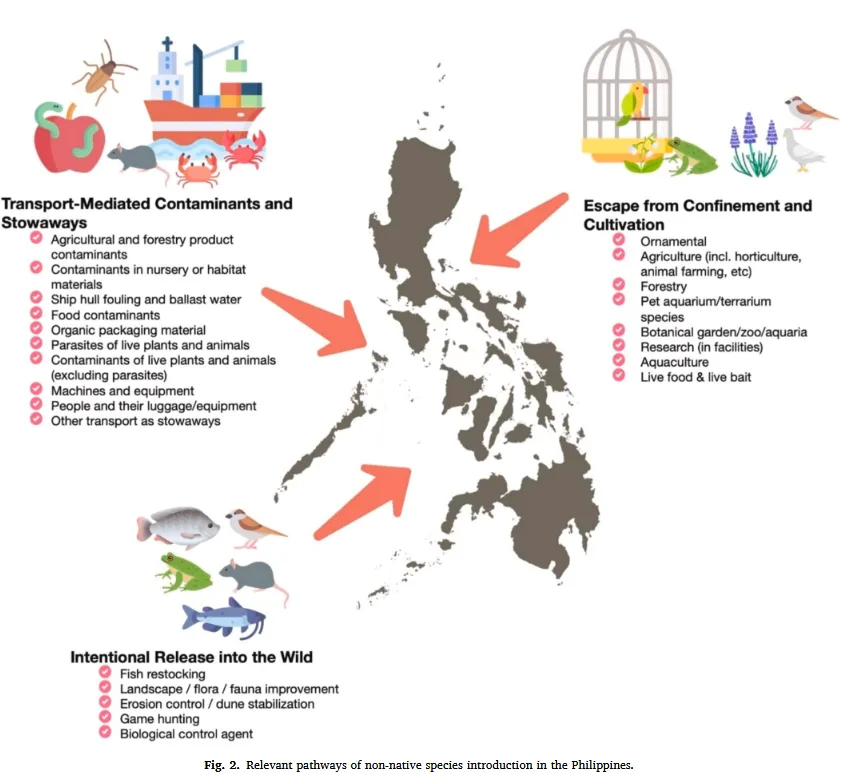
Biological invasions continue to affect native biodiversity, ecosystem stability, and sectors such as agriculture and fisheries. The authors outline six key areas that require attention: preventing future introductions when possible, evaluating ecological and economic impacts through objective assessments, strengthening coordination across institutions, establishing long-term monitoring systems, raising public awareness, and reframing how biological invasions are understood in both science and policy. These issues limit the country’s ability to manage invasive species effectively and create significant research and governance challenges.
The paper explains how these gaps affect on-the-ground management, noting that limited data and fragmented responsibilities often lead to delayed or ineffective responses. It also describes practical steps that can strengthen existing efforts, such as improving risk assessment methods, building shared databases, and supporting public outreach programs. The authors note that addressing these issues would help conservation practitioners, local governments, and researchers make more informed decisions when dealing with non-native species.
Reference:
Abreo, N. A., Kouba, A., Sy, E. Y., Yeo, D. C. J., Vallejo, B. M., Jr, Tanalgo, K. C., Gamalo, L. E., Raganas, A. F., Sabanal, B., To, D. A. L., Vilizzi, L., Soto, I., & Haubrock, P. J. (2026). Biological invasions in the Philippines: Challenges and priorities in a megadiverse country. Biological Conservation, 314, 111666. https://doi.org/10.1016/j.biocon.2025.111666
![Read more about the article Catch 22: Navigating the Power of Balance and Harmony in Knowledge and Growth [IESM@22 Anniversary Talk Series]](https://iesm.science.upd.edu.ph/wp-content/uploads/2025/02/2025-02-28_IESM22_JHP-212x300.png)